
Huntsville, AL · Garage Door Service
What Actually Happens When We Come Out on a Service Call
A look at what a Huntsville Garage Door Pros service call includes, why this area's 1980s-90s housing stock and cold-moderate climate shape the work we do.
- Repairs & new doors
- Springs & openers
- Serving 8 nearby communities
What the Weather Here Does to It
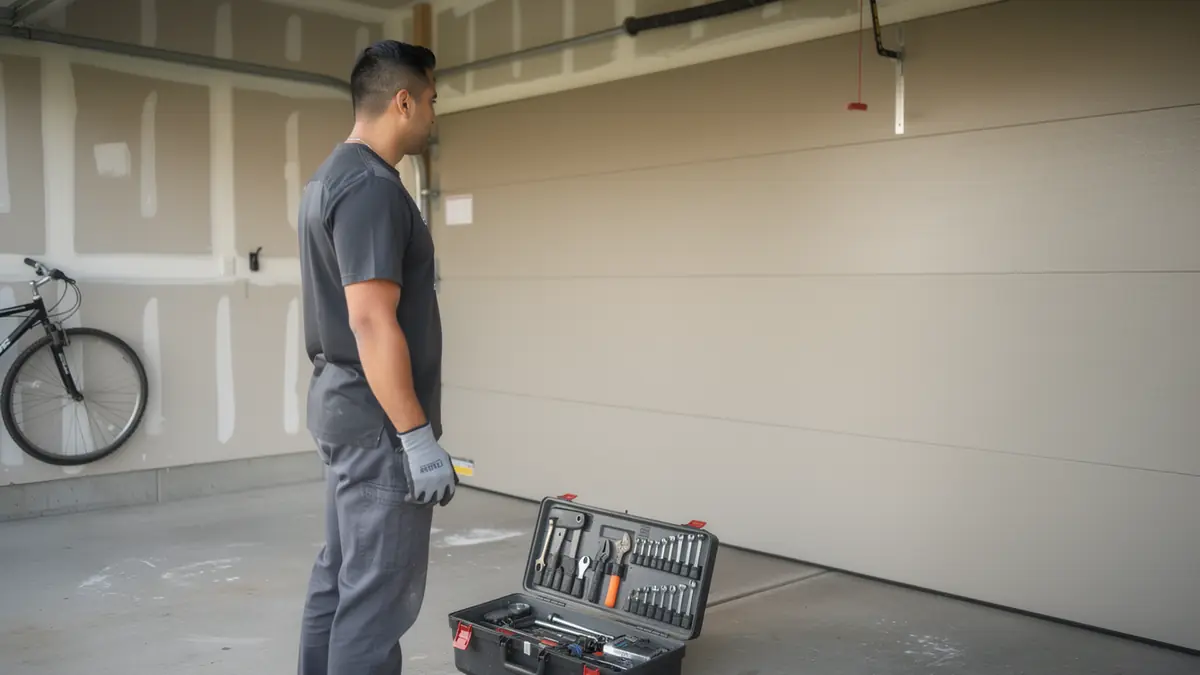
Huntsville sits in a cold-moderate band, which doesn't mean brutal winters, but it does mean real freeze-thaw cycling every year. A steel panel door swells and contracts with the temperature swing, and the weatherstripping along the bottom seal hardens faster than people expect. On a service call we're checking the torsion spring's winding cones for rust bloom, because that cold-to-warm cycling is exactly what dries out factory grease and lets moisture sit on bare metal overnight. We check the track bolts too, since metal contraction in cold spells works bolts loose over a few seasons, especially on doors that haven't been touched since they were installed. None of this is dramatic weather. It's the slow kind that nobody notices until a spring snaps on a Tuesday morning with the car half in the driveway. If your door was built in the 1980s or 90s, which describes most of the housing stock in this service area, it has been through thirty-plus of these cycles already. That's not a guess about your specific door, it's just the math of when the neighborhood went up.
Leaving It Alone
Most of the houses we work on were built between 1971 and 2012, with the median landing around 1990. That matters because a door installed in that window is now old enough that its original torsion spring is well past the manufacturer's cycle rating, even if nobody's ever had a problem with it. Leaving it alone doesn't mean nothing is happening. The spring is losing tension a little at a time, the cable is fraying somewhere you can't see from the garage floor, and the rollers are wearing a groove into the track that eventually binds. A service call at the first sign of noise or drag catches this while it's a $200 fix. Waiting until the spring lets go catches it while the door is on the floor, possibly with a cable whipping loose, and sometimes with the opener's drive gear stripped from fighting a door that wouldn't lift. We don't inflate this risk to sell a visit. We're telling you what we see on doors from this same build era, over and over, because the housing stock here skews old enough that it's a pattern, not a one-off.
The Situation
Across this service area there are roughly 15,942 households and about 12,511 owner-occupied houses, and the median household income sits near $86,902. That combination means most calls we take are homeowners who've lived with a door long enough to know its quirks and want it fixed right, not replaced on a whim. A typical service call starts with us asking what the door is doing, not what you think is wrong with it; a door that's slow to close and one that won't close at all point to different parts even if they sound similar over the phone. We inspect the spring, the cable, the rollers, the track alignment, the opener's travel limits, and the sensor eyes near the floor. On original 1980s and 90s installations, that's usually where the problem lives, since those are the parts that wear out first and get replaced least often. We give you a straight answer on what's failing and what it costs before anything gets taken apart, because a surprise bill on a repair that should've been predictable is its own kind of damage to trust.
The Common Mistake
The mistake we see most in houses from this era is treating the opener as the problem when the spring is the actual cause. A door that's gotten heavy to lift by hand, slow on the opener, or that reverses halfway up usually has a spring losing tension, not a motor wearing out. Homeowners replace the opener, spend the money, and the door still struggles within a season because the spring never got touched. On a door built in the 1980s or 90s that's never had the spring replaced, that's almost always where we end up. One limitation worth saying plainly: we don't carry every obsolete bracket or track style from that era on the truck. Some of the original hardware from houses built before the mid-90s isn't made anymore, and a repair sometimes turns into a partial hardware swap because the exact part doesn't exist to match. That's not us upselling, that's just what's true about hardware that old. We'll tell you when that's the case instead of forcing a mismatch that fails again in a year.
Frequently asked questions
How do you know what's wrong before you take anything apart?
We ask what the door is doing - slow, heavy, reversing, grinding - and that narrows it fast, since springs, cables, and track misalignment each show up differently. On houses from the 1980s and 90s, which make up most of this area's housing stock, the pattern is consistent enough that we usually know the likely cause before the spring tension is even checked by hand.
Is a service call different from a full door replacement?
Yes. A service call covers inspection and repair of the parts that wear out - springs, cables, rollers, track, opener settings. Replacement is a separate conversation we only raise if the door or track is damaged beyond a reasonable repair, which happens more often on hardware from the earlier end of this area's 1971-2012 housing range.
Why does the cold weather here matter for a garage door that's not even that old?
Huntsville sits in a cold-moderate climate band, so even a door from the 2000s has been through repeated freeze-thaw cycling. That stiffens lubricant, hardens weatherstripping, and loosens track bolts over time. It's gradual wear, not storm damage, which is why it often goes unnoticed until the door starts acting up.
Related garage door services in Huntsville
More garage door guides
Book garage door service in Huntsville
Call now or request a quote - tell us what the door is doing and where you are.