
Huntsville, AL · Garage Door Service
What an Uninsulated Door Costs You in a Huntsville Winter
Most Huntsville garages were built in the 1980s and 90s, before insulated steel doors were standard - what that means for cold mornings and energy loss today.
- Repairs & new doors
- Springs & openers
- Serving 8 nearby communities
What the Weather Here Does to It
Huntsville sits in a cold-moderate climate band, which means real temperature swings rather than deep freeze, but enough cold mornings and humid summer nights to put stress on a garage door panel every single day. Most houses in this service area were built between 1971 and 2012, with the median landing around 1990, and across the thirteen named areas we cover - from Redstone Arsenal out to Paint Rock - the stock is heavily 1980s and 90s construction. Doors from that period are almost always single-layer steel, stamped, with no polystyrene or polyurethane core behind the panel.
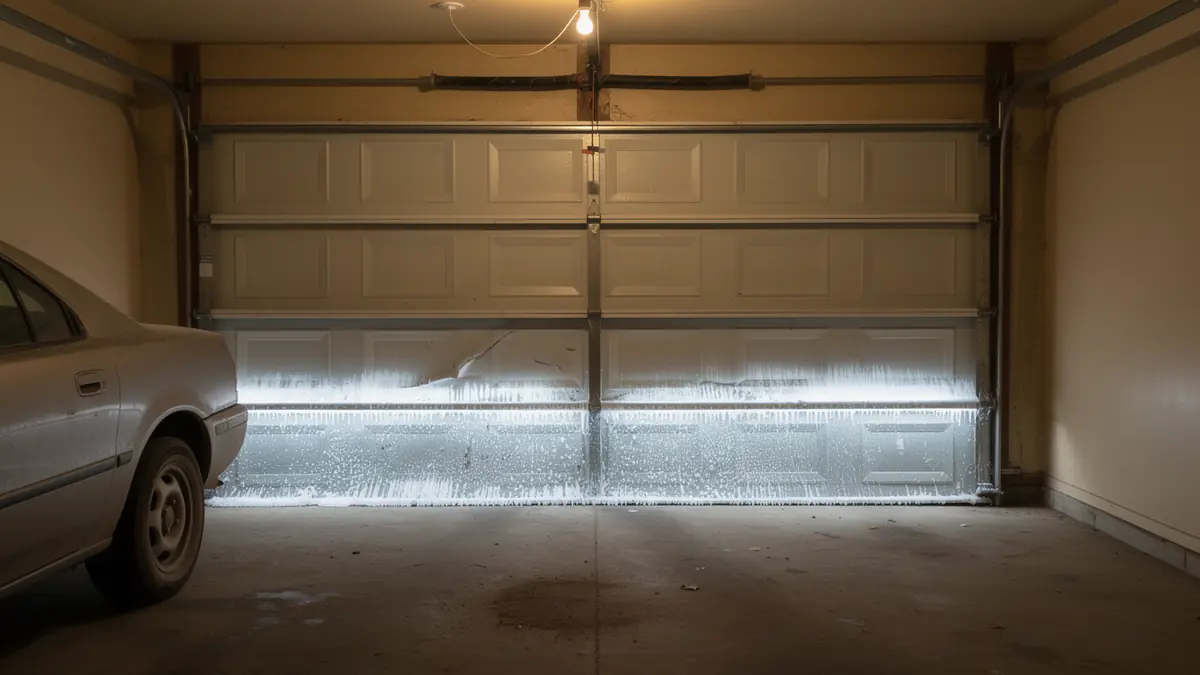
What that means in practice: the door itself becomes a cold-to-warm transfer plate. On a 35-degree morning, that steel skin sweats on the inside the second the garage warms up, and the moisture finds every seam, hinge pin, and bottom seal. Over enough winters the seal hardens, the track hardware loosens from repeated contraction, and the panel itself can start to oilcan - that wavy flex you see when you push on it. None of that is damage from a storm. It's just thirty-plus years of a door doing a job it was never built to do.
Leaving It Alone
Here's the honest part: not every original door needs to come out. If the panel is still flat, the rollers run quiet, and the bottom seal still makes contact with the slab, a weatherstrip kit and a new bottom seal can buy real years, and that's a smaller job than a full replacement. We won't talk you into a new door just because it's original to the house.
Where it stops making sense is once the steel itself has oilcanned or the torsion spring is original 1990s-era hardware that's already stretched past spec. At that point you're patching a door that's going to need the spring replaced anyway, and insulation kits glued onto a thirty-year-old panel don't hold up the way they do on a newer, flatter door. If you're only fixing the symptom - drafts, condensation, a cold wall in the garage - a seal kit is a fair first step. If the door is also loud, slow, or visibly bowed, that's a different conversation.
The Situation
With 12,511 owner-occupied houses across roughly 15,942 households in this service area, the math is pretty simple: a large share of garages here still carry their original door, and that door predates the point when insulated steel became the default choice builders reached for. The 1971-2012 build window, median 1990, covers the exact years before insulated panel doors were common on mid-range new construction. That's not unique to one street - it shows up consistently across all thirteen named communities we work in, whether that's Harvest, Meridianville, Moores Mill, or closer in toward Redstone Arsenal.
Median household income here runs $86,902, which tells you most owners can afford to fix this when they decide to - the gap isn't money, it's that nobody flags the garage door as the weak point. Homeowners insulate the attic, add storm doors, seal the windows, and the garage door - often the single largest uninsulated opening on an exterior wall - never comes up until someone notices the garage is twenty degrees colder than the rest of the house in January.
The Common Mistake
The mistake we see most is spending money in the wrong order. Someone replaces the opener for a quieter, smarter one, or upgrades to a nicer-looking panel style, and the door underneath is still the same uninsulated 1990s steel skin doing the same bad job of holding temperature. A new opener doesn't change what the door is made of.
The other version of this mistake is insulating everything else in the house first. It's a reasonable order to tackle projects in, but the garage door is often the largest single gap in the building envelope on that side of the house, and it's the last thing anyone budgets for because it still opens and closes fine. A door can work perfectly - smooth, quiet, no complaints - and still be the reason the garage, and the room above or behind it, never holds heat. Working fine and performing well aren't the same thing once a door is pushing thirty-plus years old.
Frequently asked questions
How do I know if my garage door has no insulation?
Knock on it. A single steel skin sounds hollow and feels cold to the touch even on a mild day. An insulated door has a foam core behind the steel, so it sounds dull and feels less like a sheet of metal. If your house dates to the 1980s or 90s and the door is original, there's a good chance it's uninsulated single-layer steel.
Is it worth insulating an old door instead of replacing it?
Sometimes. If the panel is still flat and the hardware is sound, a retrofit insulation kit and new seals can help with drafts and condensation. If the steel has already started to oilcan or the spring is original 1990s hardware near the end of its life, you're better off putting that money toward a new door instead of patching an old one.
Why is my garage colder than the rest of the house?
On houses built in this area's 1980s-90s construction window, the garage door is usually the largest uninsulated surface on an exterior wall. Everything else in the house may be sealed and insulated, but the original door was never built with a thermal core, so it transfers outside temperature straight through.
Related garage door services in Huntsville
More garage door guides
Book garage door service in Huntsville
Call now or request a quote - tell us what the door is doing and where you are.